The Jiangsu Key Laboratory of Precision Medical Equipment Design and Manufacturing is affiliated with the School of Mechanical Engineering at Southeast University. Its parent discipline, Mechanical Engineering, is included in theSecond Round of the "Double First-Class" University and Discipline Construction List published by the Ministry of Education, the Ministry of Finance, and the National Development and Reform Commission, and is also designated as a Priority Discipline of Jiangsu Province.The laboratory is jointly established with Micro-Tech (Nanjing) Co., Ltd. Founded in 2000 and located at No. 10 Gaoke 3rd Road, Jiangbei New District, Nanjing, Micro-Tech specializes in the R&D, manufacturing, and sales of minimally invasive medical devices, with a registered capital of 187.847422 million RMB. In July 2019, it became one of the first 25 companies listed on the Science and Technology Innovation Board (STAR Market), with the stock code 688029. In response to the development trends in fundamental sciences, engineering disciplines, and medicine—particularly the rapid advancements in artificial intelligence and robotics—the laboratory has integrated resources from Southeast University's School of Computer Science and Engineering, School of Life Sciences and Technology, Zhongda Hospital, and School of Physics. This integration brings together professionals from diverse academic backgrounds, including experts in mechanical engineering, clinical medicine, life sciences, computer engineering, and physical chemistry. Notably, the laboratory has recruited Professor Hao Chen from the University of California, Davis, a world-renowned expert in computer science whose research focuses on artificial intelligence and big data security.
The laboratory has a dedicated team of 113 personnel, including 68 from Southeast University and 45 from Micro-Tech (Nanjing) Co., Ltd. Upon full establishment, it is projected to have 250 members, encompassing both permanent and visiting staff. The laboratory has cultivated 3-5 leading talents and 20 key young faculty members, as well as 3 recipients of the National Science Fund for Distinguished Young Scholars or equivalent titles, and 5 recipients of the National Science Fund for Excellent Young Scholars or equivalent titles. The laboratory is directed by Professor Yunfei Chen. The deputy directors are Professor Zhonghua Ni and Professor-Level Senior Engineer Derong Leng.
Laboratory Leadership
Name | Title | Degree | Position | Institution |
Yunfei Chen | Professor | Ph.D. | Laboratory Director | Southeast University |
Zhonghua Ni | Professor | Ph.D. | Deputy Director | Southeast University |
Derong Leng | Professor-Level Senior Engineer | Ph.D. | Deputy Director | Micro-Tech (Nanjing) Co., Ltd. |
The laboratory focuses its research on precision medicine through three main directions: Biomolecular Sensing and Detection, Cross-Scale Manufacturing, and Intelligent Diagnosis and Treatment Systems. It conducts fundamental theoretical and key technological research to achieve original innovations, break through cutting-edge technologies, and create new avenues for the medical device industry. The goal is to develop precision medical equipment with independent intellectual property rights, lead innovation in China's medical device sector, enhance the innovative capacity and core competitiveness of domestic medical device manufacturers, and promote the advancement of Jiangsu Province's medical device industry towards precision medicine equipment.
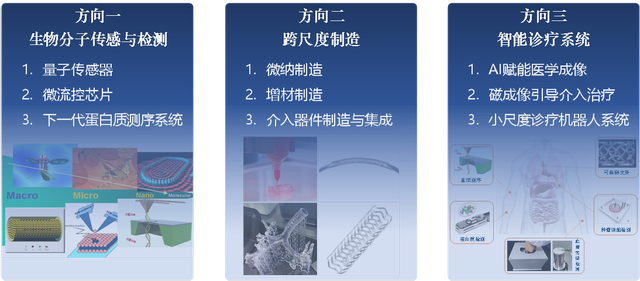
Laboratory Research Directions
Research Direction 1: Biomolecular Sensing and Detection
This direction involves research on quantum sensors, circulating tumor cell detection chips, and next-generation protein sequencing systems. Through breakthroughs in key technologies, the aim is to achieve sequencing of long-chain polypeptides, deepen the understanding of the relationship between diseases and amino acid mutations/structural abnormalities, and advance the clinical application of genomics-based precision medicine. Concurrently, research on quantum sensors and tumor cell detection chips seeks to develop new technological pathways serving precision medicine.
Research Direction 2: Cross-Scale Manufacturing
This research direction focuses on micro/nano manufacturing, additive manufacturing, and the system integration of medical equipment. Micro/nano manufacturing and additive manufacturing serve as transformative enabling technologies for medical equipment. The laboratory has long been dedicated to developing medical devices with micro/nano-scale feature structures, leveraging the size effects of functional structures to achieve more precise diagnosis, treatment, and monitoring. In terms of interventional medical equipment, the laboratory aims to achieve breakthroughs in key technologies related to scalable manufacturing, specialized components, whole-machine testing, and imaging equipment, thereby realizing system integration and establishing competitive advantages in the industry.
Research Direction 3: Intelligent Diagnosis and Treatment Systems
This direction leverages artificial intelligence and robotics to empower diagnosis and treatment. It focuses on overcoming core technological challenges in medical devices and achieving breakthroughs in key intelligent algorithms. The objective is to effectively integrate AI technology with advanced medical equipment to enhance the accuracy, efficiency, and safety of disease diagnosis and treatment, thereby safeguarding the quality of healthcare for public health. Research areas include AI-empowered medical imaging, magnetically guided interventional therapy, and small-scale diagnostic and therapeutic robotic systems.
In the fields of Biomolecular Sensing and Detection, Cross-Scale Manufacturing, and Intelligent Diagnosis and Treatment Systems, the laboratory has fostered the formation of the National Natural Science Foundation of China (NSFC) Innovative Research Group "Interfacial Properties and Physics of 2D Optoelectronic Materials" and the Jiangsu Province "Six Talent Peaks" Innovative Team "Next-Generation Gene Sequencing Based on Micro/Nano Manufacturing." It has cultivated 4 recipients of the National Science Fund for Distinguished Young Scholars, 3 recipients of the Ministry of Education's Changjiang Scholar Program, 1 recipient of the National Ten Thousand Talent Program for Leading Talents, 2 recipients of the National Hundred, Thousand and Ten Thousand Talent Project, 3 recipients of national high-level young talent programs, 2 principal investigators of National Key R&D Programs, and 1 recipient of the National Science Fund for Excellent Young Scholars.
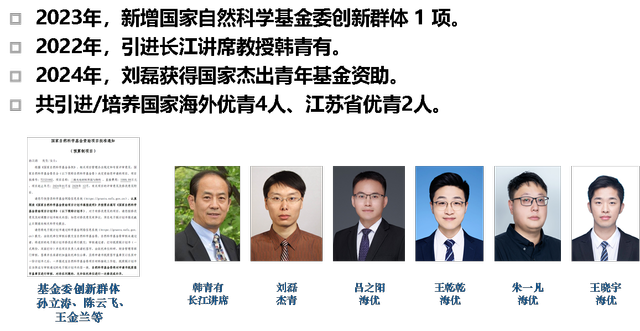
Laboratory Talent Echelon
The laboratory undertakes numerous projects, including National Key R&D Programs, Key Programs of the National Natural Science Foundation of China, and major instrument development projects. A urine glucose meter product is nearing market launch, contributing to the success of Micro-Tech's STAR Market listing.
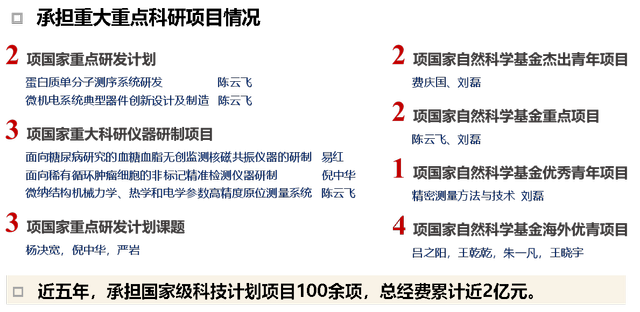
Laboratory Project Portfolio
Over the past three years, the research team has published over 300 SCI-indexed papers in journals such asNature andScience. It has filed for or been granted nearly 200 invention patents and has achieved the transformation of 7 scientific and technological achievements.
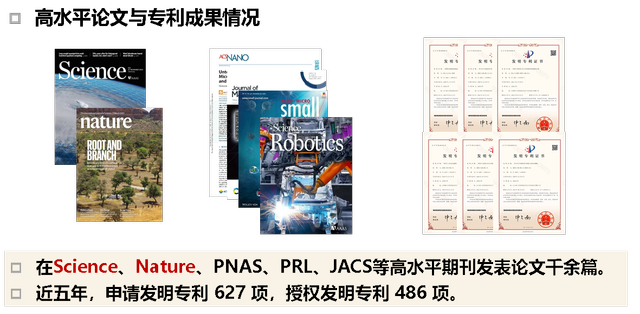
High-Impact Publications
The laboratory's research has generated significant academic impact both domestically and internationally. Its scientific achievements have been recognized with 1 Second-Class National Natural Science Award, 1 Second-Class National Science and Technology Progress Award, 2 First-Class Natural Science Awards from the Ministry of Education's Higher Education Outstanding Scientific Research Output Awards, and 5 other provincial and ministerial-level awards.
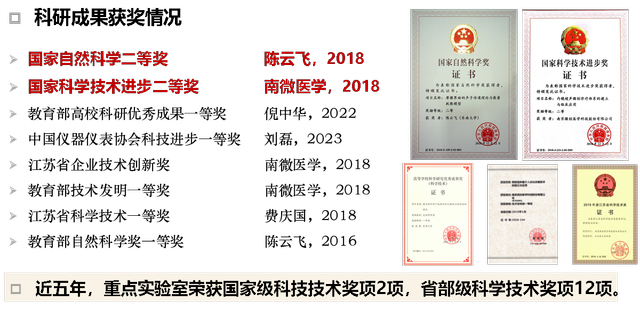
Laboratory Awards and Honors
The laboratory operates under an independent management mechanism. Its governance structure features coordinated decision-making by a Management Committee, guidance and leadership by an Academic Committee, comprehensive leadership by the Laboratory Party Committee, and overall responsibility assumed by the Laboratory Director. It has established an operational model characterized by "unified management, director responsibility, scientific decision-making, open collaboration, and integrated industry-university-research-application."
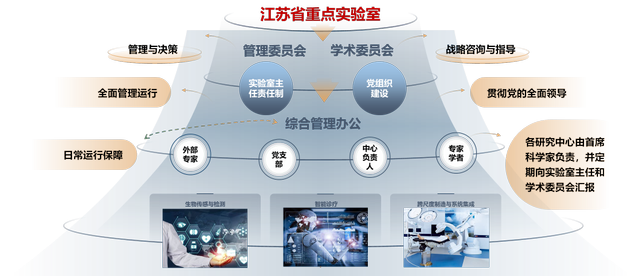
Laboratory Organizational Structure

